Inside Lotus School’s Next Chapter
At Lotus School of Excellence, growth is not simply about adding more students; it’s about expanding opportunity with intention. Founded in 2006 and authorized by Aurora Public Schools, the PK–12 charter school has built its reputation on a rigorous, college-preparatory model that serves a diverse community. Now, with a $1,254,742 grant from Great Schools Colorado, Lotus is entering a new phase, one that pairs academic excellence with thoughtful investment in infrastructure to support long-term growth.
Expanding Access, Deepening Opportunity
The expansion represents more than new square footage. It’s a coordinated effort to strengthen both academic readiness and the physical and technological environment that supports it. Classrooms, labs, safety systems, and learning spaces are all being designed to work together, ensuring that as Lotus grows, it does so without compromising the expectations that define it.
“This expansion will unlock meaningful new opportunities for our students by allowing us to serve more families while also deepening the quality of the educational experience we provide,” says Executive Director Mehmet Nalcaci.
That vision is already taking shape. Additional classrooms and specialized spaces — including a new maker space — will expand hands-on, project-based learning opportunities. The school’s STEAM programming will continue to grow, giving students more access to coursework and experiences that prepare them for college and future careers. At the same time, the expansion allows Lotus to welcome more students into a model that has consistently emphasized structure, rigor, and high expectations.
Protecting Rigor while Growing
But growth, Nalcaci emphasized, must be carefully managed to protect what makes the school successful. “At Lotus, growth is not simply about adding seats; it is about expanding access to excellence,” he said.
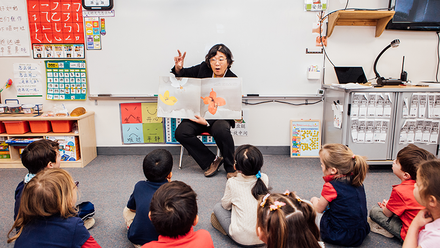
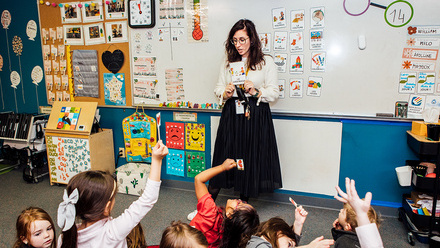
That mindset is reflected in how the school is approaching both curriculum and staffing. Investments in high-quality teachers, strong leadership, and data-driven instruction remain central to the model. The added capacity is being designed to support, not strain, the system, ensuring that every student continues to experience the same level of rigor and consistency across grade levels.
Where Infrastructure Meets Instruction
This dual focus on academic readiness and infrastructure readiness is what sets the expansion apart. While curriculum and instruction remain the foundation, the physical environment plays a critical supporting role in student success.
“Student success depends on far more than academics alone,” says Nalcaci. “When students learn in an environment that is secure, modern, and intentionally designed for their needs, it strengthens engagement, supports stronger instruction, and helps both students and staff perform at their best.”
To that end, the project includes enhancements to instructional technology, upgrades to safety and operational systems, and the creation of learning spaces that better support collaboration, innovation, and focused study. These improvements are not treated as add-ons, but as essential components of a cohesive educational experience.
The result is a model where infrastructure and instruction are aligned, and where the design of the building reinforces the goals of the classroom.
Scaling Culture with Purpose
Equally important is the school’s commitment to preserving its culture as it scales. Lotus has long emphasized discipline, ambition, and a strong sense of purpose among both students and staff. Maintaining that culture across a growing K–12 system requires intentional systems, consistent expectations, and careful hiring.
The leadership team is focused on ensuring alignment at every level — from early childhood through high school — so that families experience continuity as students progress through the grades. That includes reinforcing shared academic and behavioral expectations, as well as developing leaders who can sustain the school’s vision over time.
This approach reflects a broader principle; growth only works when it is anchored in mission.
At Lotus, that mission remains clear: preparing students for success in college and beyond, while ensuring that more families have access to that opportunity. The expansion is not about changing course, but about extending it.
While rapid growth can sometimes dilute quality, Lotus is scaling with purpose. By investing equally in academics, infrastructure, and culture, the school is positioning itself to serve more students without losing the focus that has defined it for nearly two decades.
And in doing so, it offers a compelling example of what intentional growth in education can look like: more access, more opportunity, and the same unwavering commitment to excellence.